Punk and London Bands

By Ben King

A blog exploring how Black culture and identity changed Britains pop culture and music throughout the 20th century.

Blog 4: The 1980s and taking a look at the impact of past influences

From the past few blog posts, it is pretty easy to conclude that Black identity and culture certainly made a lasting impression on Britain. However, it did not stop at the 70s. The 80s are not to be left out of our exploration into the change in Black culture and Identity in Britain. 1979 saw Margret Thatcher take the position of the prime minister of Britain, and with her, she brought hardship for a lot of the working class of the country. With high numbers of employment at the time riots ran high and with the police still in a state of racist corruption, Black people were subjected to discrimination. Matters were made worse when Margret Thatcher came out with her ‘swamped’ speech. This brought up the matter of excusing racist violence and hostility as a natural response to the threat of ‘British Culture’ posed by the commonwealth immigrants making homes in Britain.[1]

With high tensions between people of different ethnicities, aided by politics and government, came another stage in black culture, Dub poetry. Dub poetry in its simplest terms was poetry spoken with an often-radical political message, said to a reggae beat.[2]

The British government started to take a different approach to political campaigns. Specifically speaking of the conservative party’s approach with their ‘one nation’ campaign. This was brought on by the radical activities of the Brixton riot and New Cross Massacre, where it became obvious that non-white people in Britain could no longer be ignored or brushed under the mat.[3] It was the 80s that saw the first Black MPs in Britain and from there, slowly but surely equal right have started to improved, of course, there has been set back during this time and unfortunately fascism and racism can still be seen.

It can be said without a doubt that the music that came from a Black culture in the decades we have explored had a lasting impact on today. Examples lay in musicians such as Tom Misch, with his jazz/funk fusion, and collaborations with jazz-rap artists such as De La Soul. With politics increasingly being at the forefront of people’s minds, punk has also made a comeback with a large amount of punk having a political message of the wrongs of inequality.

  [1]Stuart Jeffries, “ ‘Swamped’ and ‘riddled’: the toxic words that wreck public discourse” Last modified 2014,  https://www.theguardian.com/uk-news/2014/oct/27/swamped-and-riddled-toxic-phrases-wreck-politics-immigration-michael-fallon 

[2] Christian Habekost, Verbal Riddim: The Politics and Aesthetics of African-Caribbean Dub Poetry (Amsterdam: Rodopi, 1993) 159.

[3] Paul Gilroy, There Ain’t No Black in the Union Jack: The cultural politics of race and nation (London: Routledge, 2002) 148.

Punk and London Bands

By Ben King

A blog exploring how Black culture and identity changed Britains pop culture and music throughout the 20th century.

Blog 3: The 1970s

Racial tensions were high come to the turn of the decade, with the National Front forming in 1967, non-white immigrants had yet another government party fighting in the corner of white supremacy. The NF experienced huge growth in the 70s with views that were supported by the Conservative MP, Enoch Powell, who’s ‘rivers of blood’ speech made the daily lives of Black people hell, by taking the shame out of racism in public.[1] Just days after the speech a West Indian wedding party was reported to be attacked by 14 white youths chanting the words ‘Powell, Powell’.[2] Powell’s actions enabled for right-wing parties such as the National Front to appear to be credible, this, in turn, drummed up support for such political parties.[3]

However, not all of the population agreed with these views, an obvious exception would be the migrants that were affected. Those who came at the time of Windrush were now on their second generation, this generation having been born in Britain and as they had been brought up in the country, it was their home and the only home they had ever known. This made for a generation that had a very different attitude to the ingrained racism of Britain than their parents, this generation was a lot more assertive and confrontational.[4] Ska and Reggae work for them as a link to the culture of their family and with this, an image of social rebellion was built around these styles of this music.[5] As time passed and ska continued not to hit mainstream and Reggae took over by storm, as discussed for the Black British youth, reggae was a way of expressing social rebellion against discrimination. As expressed by Caroline Coon, ‘reggae carried the torch of protest that white rock music had in the late 1960s but then lost’[6]

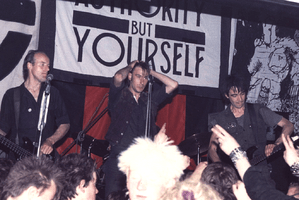
It was this rejection of political values that initially link reggae to punk. Punk’s relationship with the Black British community is often misconceived. This is because, on the surface, and onlooker may look at the punk genre and just see white people occasionally making use of the swastika symbol. However, with the punk movement, these things should not have been taken at face value, when in fact within punk ‘irony was currency’[7] and the movement itself was extremely anti-authoritarian and anti-racism.[8] The relationship between punk and reggae can be seen as an early exercise in multiculturalism.[9]

http://streetlevelphotoworks.org/event/rar_graphics

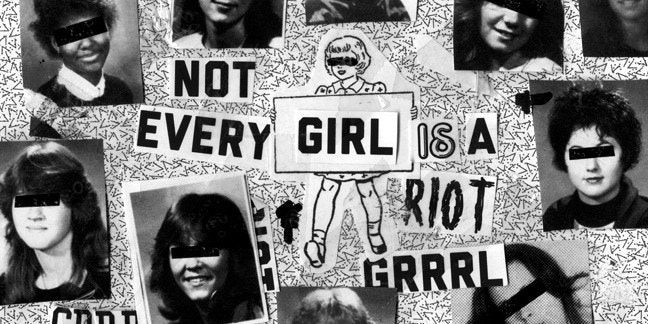
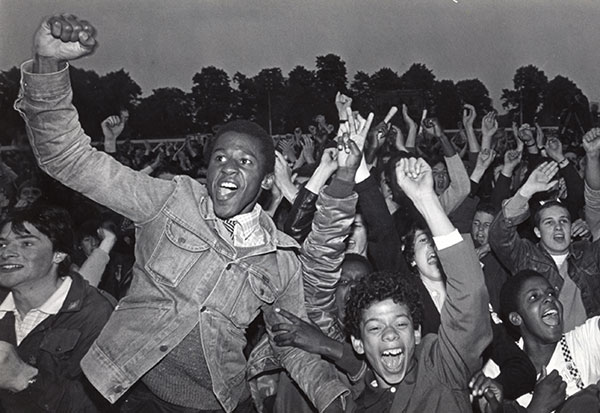
The relationship between punk and reggae led to the movement of ‘Rock against racism’. This concept was one first thought of in 1976 by a small group of politically active music fans that experienced racist remarks of Eric Clapton’s and so decided to write into the NME, calling for a movement against the ‘racist poison in rock music’[10] The organization’s slogan was ‘Reggae, Soul, Rock and Roll, Jazz, Funk and Punk: Our music’[11] and with that RAR, with it 300 organised gigs, five carnivals and anti-racist campaigns kept running between 1976-1981.[12]

  [1] Michael Higgs, “From the street to the state: making anti-fascism anti-racist in 1970s Britain,” Race and Class Vol 58 No 1 (July 1, 2016): 68.

[2] Higgs, “From the street to the state: making anti-fascism anti-racist in 1970s Britain,” 68.

[3] Higgs, “From the street to the state: making anti-fascism anti-racist in 1970s Britain,” 68.

[4] Jon Stratton, “Skin deep: ska and reggae on the racial Faultline in Britain, 1968-1981,” Popular Music History Vol 5 No 2 (21 Nov 2011): 194.

[5] Joseph Heathcott, “Urban Spaces and Working-Class Expressions across the Black Atlantic: Tracing routes of Ska,” Radical History Review issue 87 (2003): 184.

[6] Stratton, “Skin deep: ska and reggae on the racial Faultline in Britain, 1968-1981,” 200.

[7] Alessandro G. Moliterno, “What Riot? Punk Rock Politics, Fascism, and Rock Against Racism.” Last modified 2012, http://www.inquiriesjournal.com/articles/612/2/what-riot-punk-rock-politics-fascism-and-rock-against-racism

[8] “What Riot? Punk Rock Politics, Fascism, and Rock Against Racism.”

[9] Stratton, “Skin deep: ska and reggae on the racial Faultline in Britain, 1968-1981,” 201.

[10] Ian Goodyer, “Rock Against Racism: Multiculturalism and Political Mobilization, 1976-81,” Immigrants & Minorities 22:1: 44.

[11] Goodyer, “Rock Against Racism: Multiculturalism and Political Mobilization, 1976-81,” 45.

[12] Goodyer, “Rock Against Racism: Multiculturalism and Political Mobilization, 1976-81,” 45.

Punk and London Bands

By Ben King

A blog exploring how Black culture and identity changed Britains pop culture and music throughout the 20th century.

Blog 2: The 1960s

In the last blog post, we explored the style of music brought over by Windrush as well as the challenges that were faced by the non-white migrant communities in the 1950s, this included the introductions of calypso, but also the growth of discrimination and tensions towards commonwealth migrants. One event, in particular, left a large mark on how politics and Black culture would evolve in the following decades, this of course was the race riots and the anti-black riots in 1958. With a large amount of support shown for the anti-black riots came a decade of the Labour and Conservative parties progressively surrendering to racism through fear of losing seats in parliament.[1]

This meant that the 60s was full of one immigration Act after another, all of which harmed the lives of non-white migrants. These started with the Common Wealth Immigrants Bill in 1962, which restricted the number of settler migrants and meant that employment vouchers had to be issued to settlers, with a clause that meant if a migrant was to commit a crime within five years of arriving, they were to be deported. With this act, Blackness was officially equated with second-class citizenship.[2] This bill was taken further, with the whitepaper of Immigration in 1965 which limited employment vouchers to only be given only to skilled workers and professional people, further restrictions meant that there was a limit of 8,500 vouchers being available. Discrimination, at this time, was taken out of the streets and made a place in government.[3] This can be seen with the examples of Peter Griffiths and Enoch Powell, who’s ‘rivers of blood speech’ made on April 20th 1968 riled some of the working-class to believe his racist views.

unnamed4.jpg (636×547)
http://digjamaica.com/m/wp-content/uploads/2015/02/unnamed4.jpg

However, while taking all this into account, the impression that Black culture and music had on British youth could not be doubted. By the time of the mid-1960s Calypso music started to fade out and was replaced with Jamaican Ska music, this music was popular in places such as dance halls among the urban Jamaican youth popular culture as it celebrated old island traditions.[4] As the Ska became more popular within youth culture it started to form the ‘so-called Rude Boy, a suit-and-tie hooligan bent on turf protection and the defiance of adult authority’[5] However, there was still traces of Calypso in music at the time, this can be seen with examples such as The Steward Family, with their gospel-style singing that was a mixture of American country gospel singing with Calypso rhythms.

Towards the end of the 60s saw second-generation Windrush, born in Britain with a very different attitude towards racism.[6]

  [1] Peter flyer, Staying Power: The History of Black People in Britain (London: Pluto Press, 2010), 381.

[2] Flyer, Staying Power: The History of Black People in Britain, 382.

[3] A. Sivananden, A Different Hunger: Writings on Black Resistance (London: Pluto Press, 1982), 105.

[4] Joseph Heathcott, “Urban Spaces and Working-Class Expressions across the Black Atlantic: Tracing routes of Ska,” Radical History Review issue 87 (2003): 184.

[5] Heathcott, “Urban Spaces and Working-Class Expressions across the Black Atlantic: Tracing routes of Ska,” Radical History Review No 87 (2003): 184.

[6] Jon Stratton, “Skin deep: ska and reggae on the racial faultline in Britain, 1968-1981,” Popular Music History Vol 5 No 2 (21 Nov 2011): 194.

Punk and London Bands

By Ben King

A blog exploring how Black culture and identity changed Britains pop culture and music throughout the 20th century.

Blog 1: 1900 to the 1950s

In the 20th century, Britain was introduced to a style of music developed in the deep south of America from blues and ragtime. This music was Jazz. Jazz quickly took to the underground scene in Britain with bands arriving in Britain such as the Original Dixieland Jazz band in 1917.[1] The movement had to remain underground due to the remaining colonial-era supremacy of the British people at the time, this supremacy would often result in racially-based attacks.[2] 

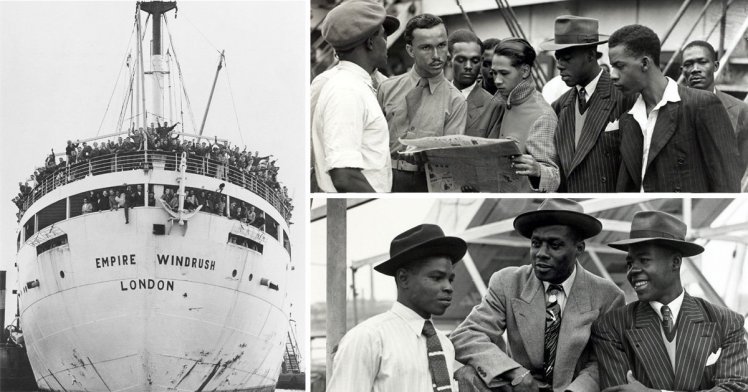
In 1948, the SS Empire Windrush arrived at the Tilbury harbour, bringing around 500 commonwealth migrants on the request of the government to rebuild the country after the second world war. These people were from the Caribbean islands, among them was Aldwin Roberts, who went by the stage name of Lord Kitchener, with him he brought the Trinidadian style of folk music, Calypso. 

https://www.sutori.com/item/untitled-7927-9044

With the government call for people to work, came the expectation of a better life, as being part of the commonwealth, the people had been taught to think of Britain as the ‘mother country’.[3] The reality, however, was very different. Migrants were made to struggle as there was discrimination in employment, housing and on the streets, with signs such as ‘Room to let – No coloured men’ being a common sight. As the migrant population grew as did the ‘ideology of whiteness’ coming from Independence of countries that were previously owned by the British Empire alongside colonial-era science and sexual jealousy, such discrimination led to the groups of Black people to form their communities with the commonality of the shared discrimination from the time.[4] The couple of decades after Windrush was to be some of the worst times experienced for Caribbean migrants in Britain.[5] This is reflected in the 1958 race riots across London in August through to September, as the non-white community was forced to live in squalid conditions with landlords who threatening physical harm to their tenants. However, media sensationalised these riots and so migrant communities found themselves terrorised both through violence from groups such as the ‘teddy boys’ who were known for going out on the streets on weekends with the intent of open hostility against any non-white immigrant that could be found.[6] These attacks became more frequent as the anti-black riots in London started to take place, by the end of August it was a nightly affair to have crowds parading known areas of residency for immigrants, wreaking havoc to people’s property and causing harm to the people themselves. One man was recorded to have said, ‘Black people are treated worse than a dog here. They watch you wherever you go. You daren’t go out in the evening – it’s a prison, this country.’ With the police taking little notice of these attacks the community grew closer, music was a key component to this community in way of expressing their racial inequity.

https://www.versobooks.com/blogs/2649-we-are-those-lions-5-strikes-and-riots-that-shook-modern-britain

However, with examples of American civils rights, non-white immigrants found strength in their communities and music. Music was a primary way for people to show pride in their race despite everything happening in the outside world.[6] It would seem that the politics of the day was to set the tone for the music of the following decades, this will be explored in my following posts. 

  [1] Jason Toynbee, “Race, History and Black British Jazz,” Black Music Research Journal Vol 33 No 1 (Spring 2013): 2.

[2] Toynbee, “Race, History and Black British Jazz,” 2.

[3] Bob Carter, Realism and Racism: Concepts of Race in Sociological Research (London: Routledge, 2000), 119.

[4] David Olusoga, Black and British (London: Macmillan, 2016), 500-501.

[5] Olusoga, Black and British, 498.

[6] Michael Higgs, “From the street to the state: making anti-fascism anti-racist in 1970s Britain,” Race and Class Vol 58 No 1 (July 1 2016): 67.

[7] Toynbee, “Race, History and Black British Jazz,” 9.

About my blog

By Alizee Compson

How the punk movement influenced today’s culture and music around the world

I chose the punk movement for my blog due to me being interested in the movement. It attracted me from listening to it and agreeing to the messages that this genre of music was sending.

As a female I found it empowering, making my first blog post. My blog discusses how the punk movement influenced today’s society. Presenting how the movement was more than leather jackets.

This blog explores civil rights issues, black culture and music, female empowerment and far left politics. This blog shows how this movement had a political agenda, plus how in all these areas punk was involved.

Bibliography

By Alizee Compson

  1. I like fucking. The Singles, 1998. Bikini Kills
  2. Reddington, Hellen. The Lost Women of Rock Music: Female musicians of the Punk Era, Whole book. London. Routledge.
  3.  Mullen, John. “UK Popular Music and Society in the 1970s.” Revue Française de Civilisation Britannique. French Journal of British Studies 22, no. XXII-Hors série (2017).
  4. Rock Against Racism, Punk and Post Punk, Jeremy Trammer (2018): 85-101, accessed 31st March 2020. Doi:10.3917/etan.711.0085
  5. White Riot. The Clash. February 1977. The Clash
  6. Anarchy for the UK. Never mind the Bollocks, Here’s the Sex Pistols, 1977. Sex Pistols
  7. Ian P. Moran. Punk: do it yourself subculture, Volume 10. Issue 1. Article 13 (Western Connecticut State University, 2010) P 58, 59
  8. Berkers, Pauwke. Rock Against Gender Roles: Performing Femininities and Doing Feminism Among Women Punk Performers in the Netherlands, 1976-1982Journal of Popular Music Studies. Vol. 24, 2012. doi:10.1111/j.1533-1598.2012.01323.x.

How the punk movement drew attention to black music and culture

By Alizee Compson

Punk was a movement that was about rebelling. The ‘Rock against Racism’ in 1978 was symbolic of how much this punk movement cared about the civil rights issues of black people. This is shown with the movement’s reaction to the racist attacks taken place in the UK. 

Black culture and music was rising during the same time as the punk movement with Jazz, Reggae, ska and Trinidad folk music gaining attention. Black culture and music were coming from Caribbean culture. This started after World War two with the large number of immigrants coming to the UK. The BBC had a series devoted to the ‘tales’ from around the British Empire, a broadcast that was from September 1943 to March 1945. It included topics such as black music such as Trinidad folk music. This was the first step of black music gaining attention, all starting in the UK and London, although Punk is what drew the most attention to black music.

Ska was a Jamaican musical genre from the 1950s. Although, in the 1970s a new genre formed that included hard core punk and ska, making ska punk. Groups such as the specials became well known and spread this new music around the world. Groups in America such as Less than Jake and Reel Big Fish were just two of many famous bands the represented this genre. It spread all across the world such as France with Babylon circus and Australia with Mineral Turpentine, plus many other countries. This genre was the first step in making black music mainstream.

A image from Rock Against Racism in 1978

Reggae also started gaining mainstream success when Reggae bands started collaborating with Punk bands for Rock against Racism. This movement that started in 1976 became increasingly popular all-round the UK, eventually spreading all round the world. On the 1978 the Rock against Racism event took place. This massive event that gained world-wide attention and had reggae bands such as Misty in Roots, a band originating in London. This band even led the parade. Presenting how Reggae and punk collaborated to draw attention not only civil rights issues, but black culture and black music. 

Hassam Mahamdallie wrote in “How is Racism Changing in Britain” that the punk Do it Yourself aesthetic of small local concerts and magazines plus independent record labels had a positive effect for black music groups such as Reggae. He said it was difficult to measure the success of Rock against Racism with the tools of the Punk DIY aesthetic, but many participants were convinced it had a big effect. He used the quote “Without Rock Against Racism London would not be the multicultural capital of Europe today”. Showing how punk helped draw attention to black music, but also helped the setting up of black music in the UK.

Mullen, John. “UK Popular Music and Society in the 1970s.” Revue Française de Civilisation Britannique. French Journal of British Studies 22, no. XXII-Hors série (2017).

Posters made about Rock Against Racism

How the punk movement helped draw attention to civil rights issues

By Alizee Compson

Punk was a progressive movement, that was for equality of all. This included going against racism. Punk spread these views in their songs, in posters and even events.

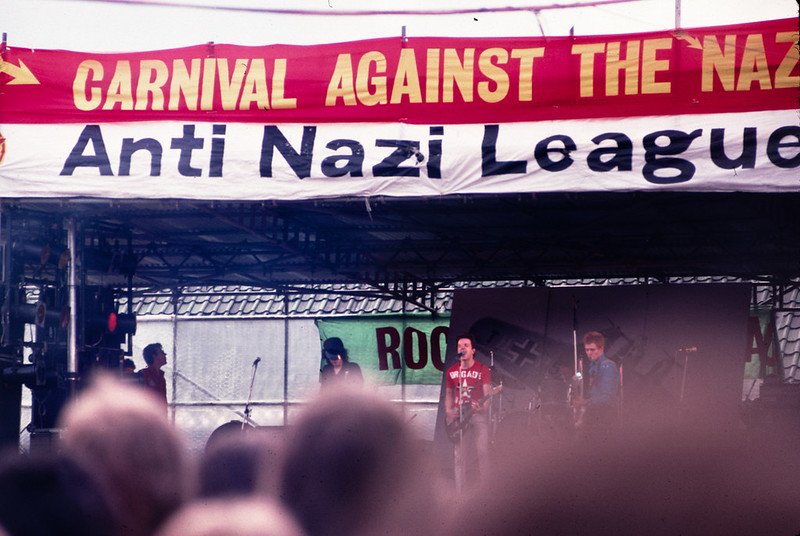
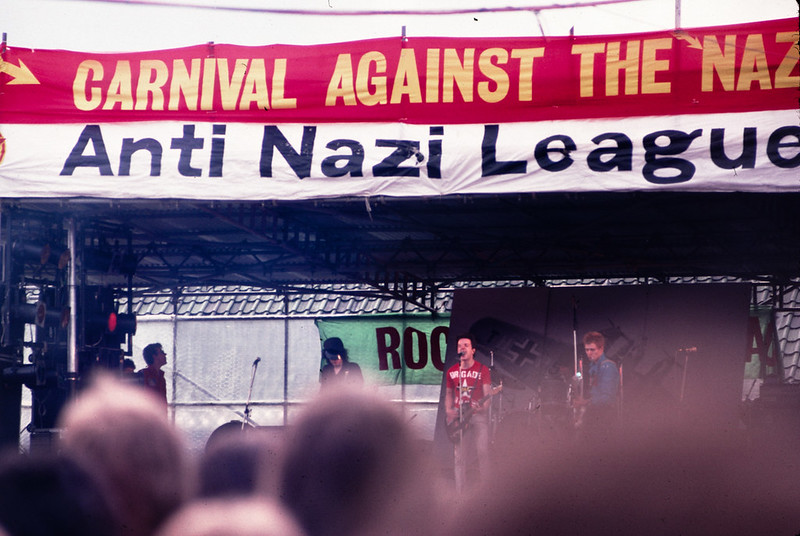
The most famous event had to be ‘Rock against Racism’ on the 30th April 1978 in London. Coaches came from all across England to celebrate this event. This event emerged as a reaction to a rise in racist attacks on the streets of the United Kingdom. People marched the streets of London to attend an all-day concert headlining Tom Robertson and the Clash. 

The Clash is an English rock bank that formed in London in 1976 and was part of the original wave of British punk rock. They sang a song called ‘White Riot’ in the ‘Rock against Racism’. This song is discussing the riots of the black youth with the police in the summer of 1976. Those riots inspired this song which helped define the group’s political agenda of being anti-racist.

White Riot. The Clash. February 1977. The Clash

Black man got a lotta problems

But they don’t mind throwin’ a brick

White riot, I want to riot

White riot, a riot of our own

The Clash at Rock Against Racism event in 1978

The event ‘Rock against Racism’ (RAR) gained international attention. The first RAR gig took place in the Princess Alice pub in London’s East End in 1976. The RAR started publishing its own magazine, Temporary Hoarding. All round the UK more RAR bands were appearing. This movement originating from Punk and rock bands in London started appearing all round the world such as the Ireland, Stiff Little Fingers, plus many others.

A professor Jeremy Tranmer wrote in Rock Against Racism, Punk and Post Punk in 2018 believed that the Rock Against Racism movement that started in 1976 was closely linked to the growing punk movement. He and many activists, journalists and historians believed this close relationship was symbolised by the events of ‘Rock Against Racism’ held in London in 1978. However, he believes the changes within punk and the appearance of punk had consequences for the RAR, meaning he believes their change of appearance went against anti-racist sentiment.

Rock Against Racism, Punk and Post Punk, Jeremy Trammer (2018): 85-101, accessed 31st March 2020. Doi:10.3917/etan.711.0085

However, punk groups became RAR music groups and supported other RAR groups. This spreading of RAR groups helped spread the views of anti-racism. Eventually spreading all round the world, along with a massive event in 1978 that gained even more publicity for the groups. All of this originated in London with London music groups seeing the riots of the black youth.

How the punk movement helped progress far left political movements and spread left wing politics

By Alizee Compson

Punk’s ideology and belief was mainly rebel from society’s norms. The ideology was anti-authoritarianism, free thought and individualism and anti-establishment. 

Britain being the birth place of punk, meant Britain spread across the world these new views going against a traditional conservative government. The traditional conservative government include tradition, hierarchy and authority. 

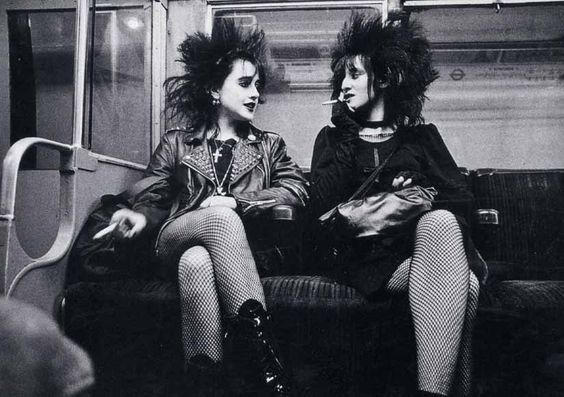
Punk spread these views with their music, DIY life and dress culture. This dress culture alone would show the world that they were a punk and believed in the punk ideology, it was also outrageous, completely against society’s norms. It was an individual form of clothing, against tradition.

The Sex Pistols used the song ‘Anarchy in The UK’ to spread these views around the world. The lyrics as follows:

Anarchy for the UK. Never mind the Bollocks, Here’s the Sex Pistols, 1977. Sex Pistols 

Anarchy for the UK

It’s coming sometime and maybe

How many ways to get what you want 

I use the best, I use the rest

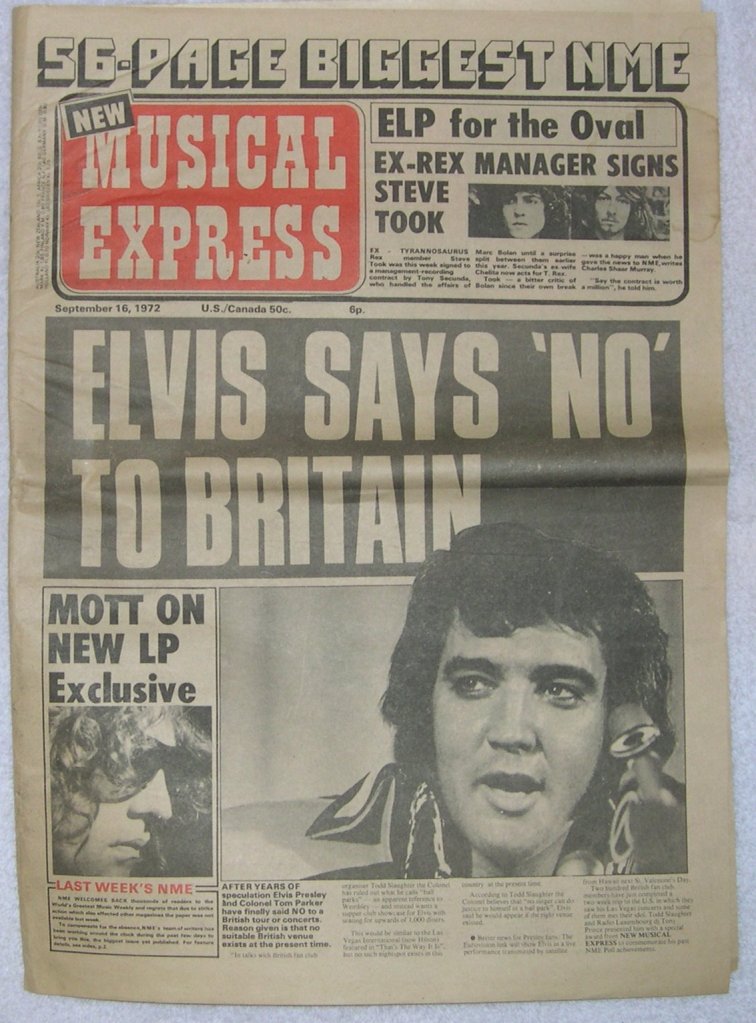
I use the N.M.E

These lyrics express a declaration for change by asking for anarchy in the UK. Johnny rotten, lead singer of a punk band, was calling for a non-recognition of authority or other controlling systems. These lyrics also explain how punk spread its views, the N.M.E, new musical express, a magazine based in London. These tactics were used by other groups around the world when rebelling for a left-wing government.

In the book punk: do it yourself subculture by Ian Morgan, adds the view of Alan O’Connor (2003) who reports in Mexico punk had a big impact on politics. The author believes punk had an impact on Mexican politics. This author examined the relationship between a local anarchist group and the Zapatista movement and the Universidad Nacional Autónoma de México (UNAM) strike of 1999-2000.

Ian P. Moran. Punk: do it yourself subculture, Volume 10. Issue 1. Article 13 (Western Connecticut State University, 2010) P 58, 59 

The author attended a benefit show in 1994 in Mexico City in support of the Zapatista movement and the UNAM strike of 1999-2000. He examined how anarchists’ punks played a part in the protest. Along with that the author examined the lyrics of Mexican punk bands and the political views of anarchy punks published in Mexican fanzines, these were ways in which the author believed these views were spread to people to create these political movements. All of this gave the author his stance on how punk influenced politics.

Britain being the birth place of punk in the 1970s showed how influential this movement had become. Not only did it manage to spread all the way across the world to places like Mexico, but also how it is still relevant in today’s society. The UNAM strikes of 1999-2000 was almost 30 years after the beginning of the movement.

Design a site like this with WordPress.com
Get started