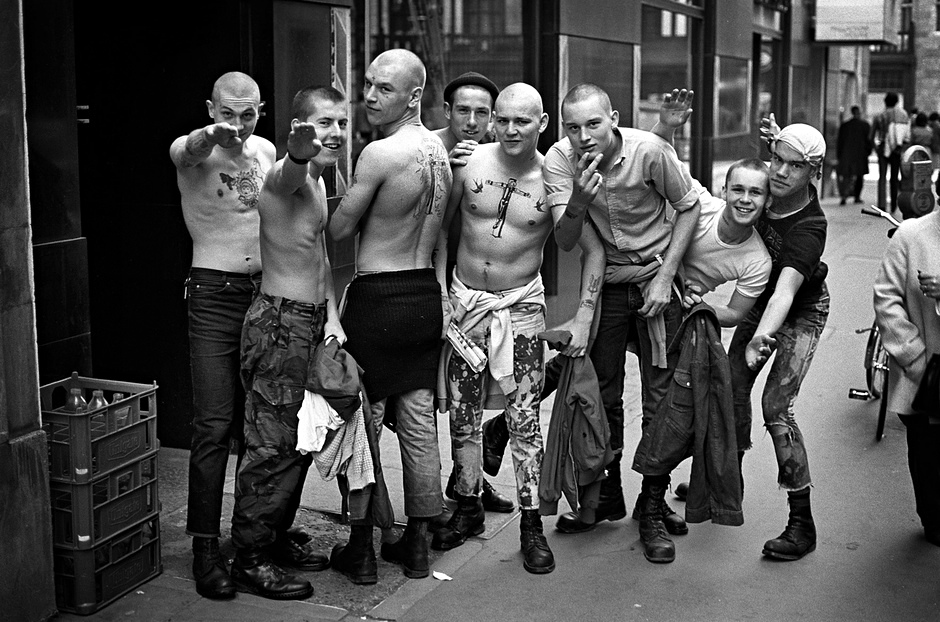
‘Punk could be a blind, nihilistic rebellion, distinctly apolitical in its stance. At the same time there were fears that it would become oriented with the right, with neo-fascism and racism, or conversely that it had distinctly left-leaning tendencies.’ [1]
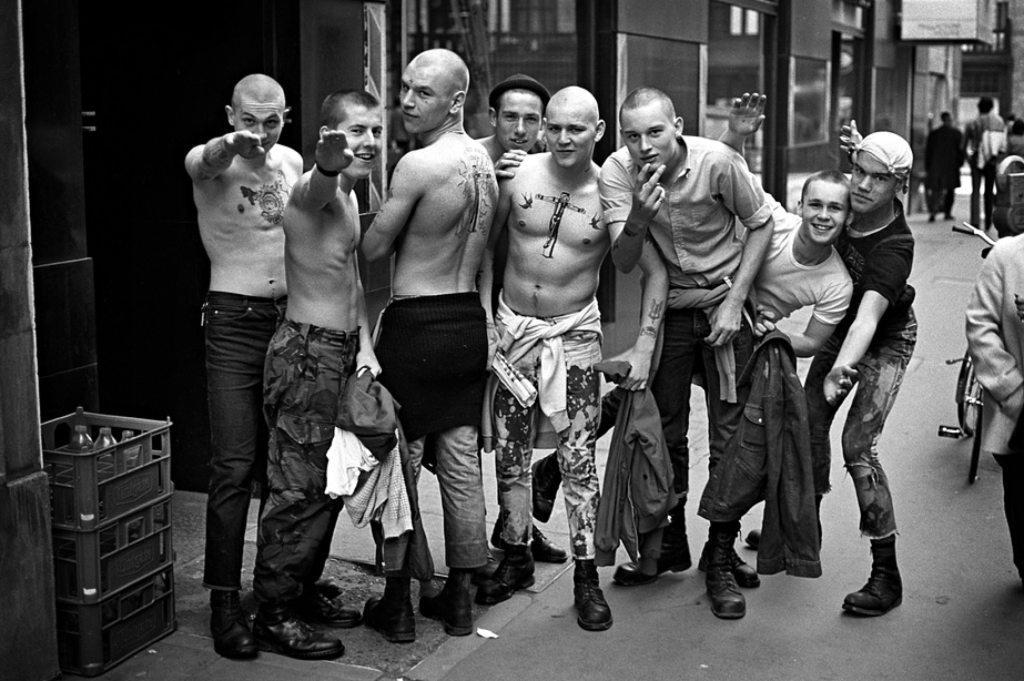
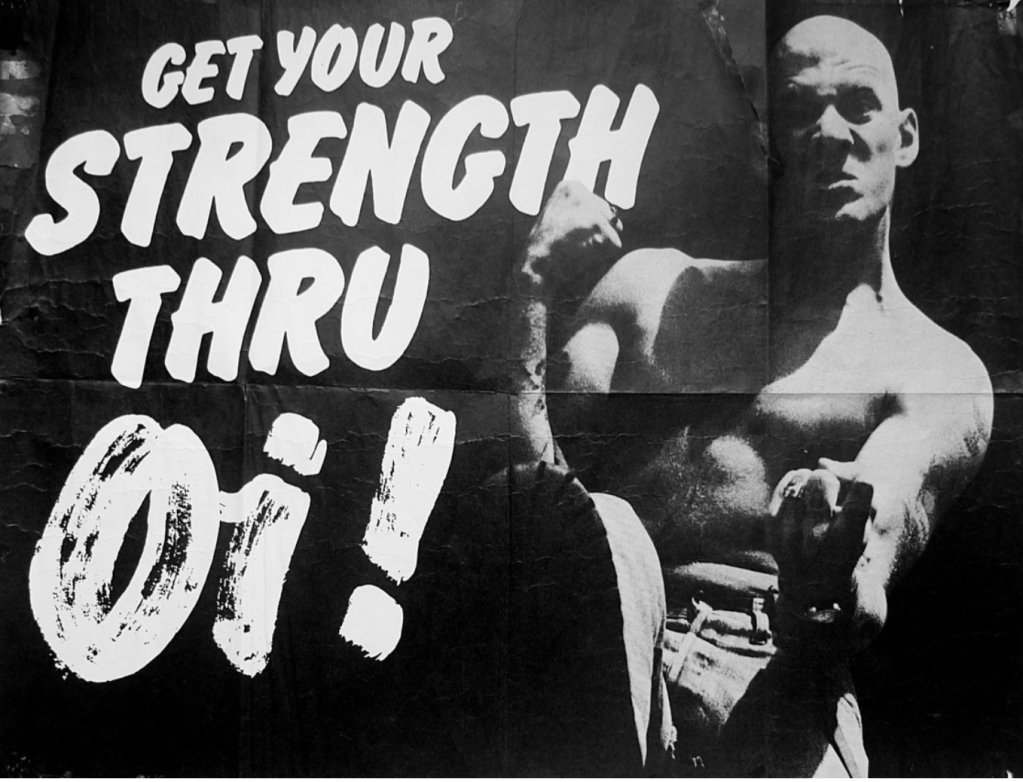
The punk and more notably the skinhead movement has received criticism over whether it was the unifying left leaning movement that people romanticise it to be. Despite the affirmation by many that it is an example of a successfully anti racist subculture it has had the issue of a culture gaining popularity and losing its way or being twisted to mean something else to fit individual movements agendas. An example of this is the skinhead movement which suffered greatly as a subculture through its affiliation with the national front and people who adopted it to push racist ideology. The growth of the far right and skinhead’s affiliation with the NF coincided with the time that governmental shifts were taking place to entice the right wing voters and when the movement did not gain traction and fizzled, conservative governments which were becoming increasingly discriminatory to encourage popular votes took its place. ‘This can be related directly to the issues resulting from the sense of political and economic crisis being faced more generally in Britain at the time, which incidentally can be seen as having contributed to a growth in racist rhetoric on the political scene. ‘ [2] Anger was redirected by the government and pointed the finger at migration to excuse the pitiful state of employment within Britain at the time rather than accepting responsibility that it was factory closures done by them that had created the problem. people were angry at the state of the economy and with a government that wouldn’t accept responsibility for that, the national front agenda and other far right movements were able to redirect this malleable anger and attract misguided youth to the cause. The alienated white youth were an easy target for exploitation and the ska movement suffered greatly with this. A stark contrast soon developed from the original scene where the working classes of all race were once united in a love for the music and style the culture once promoted.
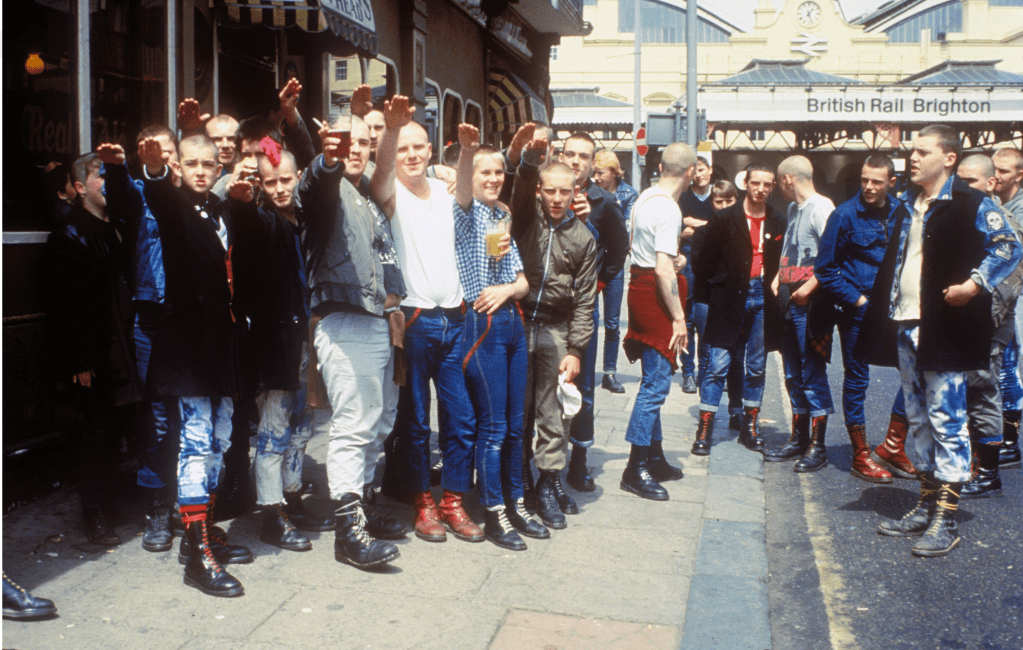
‘ it is neither admirable nor astonishing that youths, even those involved in punk, who had grown up in the same neighborhoods, where the NF had been able to drum up support in the preceding years, might have held views that were xenophobic.'[3]
There are also critiques regarding the tendency for what some see as cultural appropriation within punk, where imported styles from countries were used with little understanding of the roots and meanings as it was fuel for the latest fad and it was seen as trendy and cool. The adoption of black music as well does not always equal acceptance and a good example of this is how although many racist/ neo-fascist skinheads would dance to reggae and sing the songs, their anger was directed at migrants rather than the side of skinhead which was all about unity and defiance against the oppression of racism and the understanding of the roots of the identity. The often violent expressions of nationalism and anti-immigration sentiments could not be a more dividing environment birthed from the punk music and ska scene proving that the kids could in fact be divided after all.
‘Influences from black culture were appropriated by working class youths during leisure time as material to fuel their youthful rebellion, but this did not mean that they shared affinity with their new neighbour’ [4]
[1] Moliterno, Alessandro G. “What Riot? Punk Rock Politics, Fascism, and Rock Against Racism.” Last modified 2012, http://www.inquiriesjournal.com/articles/612/2/what-riot-punk-rock-politics-fascism-and-rock-against-racism
[2] Moliterno, Alessandro G. “What Riot? Punk Rock Politics, Fascism, and Rock Against Racism.”
[3] Moliterno, Alessandro G. “What Riot? Punk Rock Politics, Fascism, and Rock Against Racism.”
 From Local to Global: The History of Music in London Group 1