By Alizee Compson
Punk was a progressive movement, that was for equality of all. This included going against racism. Punk spread these views in their songs, in posters and even events.
The most famous event had to be ‘Rock against Racism’ on the 30th April 1978 in London. Coaches came from all across England to celebrate this event. This event emerged as a reaction to a rise in racist attacks on the streets of the United Kingdom. People marched the streets of London to attend an all-day concert headlining Tom Robertson and the Clash.
The Clash is an English rock bank that formed in London in 1976 and was part of the original wave of British punk rock. They sang a song called ‘White Riot’ in the ‘Rock against Racism’. This song is discussing the riots of the black youth with the police in the summer of 1976. Those riots inspired this song which helped define the group’s political agenda of being anti-racist.
White Riot. The Clash. February 1977. The Clash
Black man got a lotta problems
But they don’t mind throwin’ a brick
White riot, I want to riot
White riot, a riot of our own
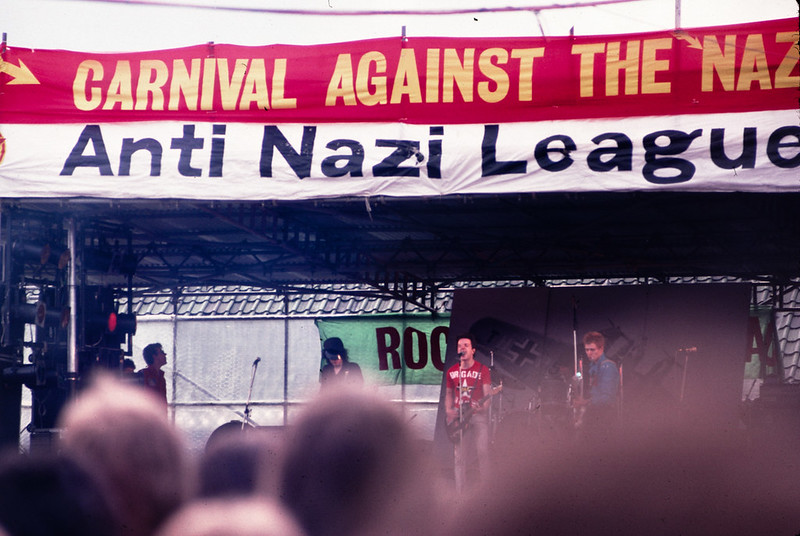
The event ‘Rock against Racism’ (RAR) gained international attention. The first RAR gig took place in the Princess Alice pub in London’s East End in 1976. The RAR started publishing its own magazine, Temporary Hoarding. All round the UK more RAR bands were appearing. This movement originating from Punk and rock bands in London started appearing all round the world such as the Ireland, Stiff Little Fingers, plus many others.
A professor Jeremy Tranmer wrote in Rock Against Racism, Punk and Post Punk in 2018 believed that the Rock Against Racism movement that started in 1976 was closely linked to the growing punk movement. He and many activists, journalists and historians believed this close relationship was symbolised by the events of ‘Rock Against Racism’ held in London in 1978. However, he believes the changes within punk and the appearance of punk had consequences for the RAR, meaning he believes their change of appearance went against anti-racist sentiment.
Rock Against Racism, Punk and Post Punk, Jeremy Trammer (2018): 85-101, accessed 31st March 2020. Doi:10.3917/etan.711.0085
However, punk groups became RAR music groups and supported other RAR groups. This spreading of RAR groups helped spread the views of anti-racism. Eventually spreading all round the world, along with a massive event in 1978 that gained even more publicity for the groups. All of this originated in London with London music groups seeing the riots of the black youth.
 From Local to Global: The History of Music in London Group 1