By Alizee Compson
Punk was a movement that was about rebelling. The ‘Rock against Racism’ in 1978 was symbolic of how much this punk movement cared about the civil rights issues of black people. This is shown with the movement’s reaction to the racist attacks taken place in the UK.
Black culture and music was rising during the same time as the punk movement with Jazz, Reggae, ska and Trinidad folk music gaining attention. Black culture and music were coming from Caribbean culture. This started after World War two with the large number of immigrants coming to the UK. The BBC had a series devoted to the ‘tales’ from around the British Empire, a broadcast that was from September 1943 to March 1945. It included topics such as black music such as Trinidad folk music. This was the first step of black music gaining attention, all starting in the UK and London, although Punk is what drew the most attention to black music.
Ska was a Jamaican musical genre from the 1950s. Although, in the 1970s a new genre formed that included hard core punk and ska, making ska punk. Groups such as the specials became well known and spread this new music around the world. Groups in America such as Less than Jake and Reel Big Fish were just two of many famous bands the represented this genre. It spread all across the world such as France with Babylon circus and Australia with Mineral Turpentine, plus many other countries. This genre was the first step in making black music mainstream.
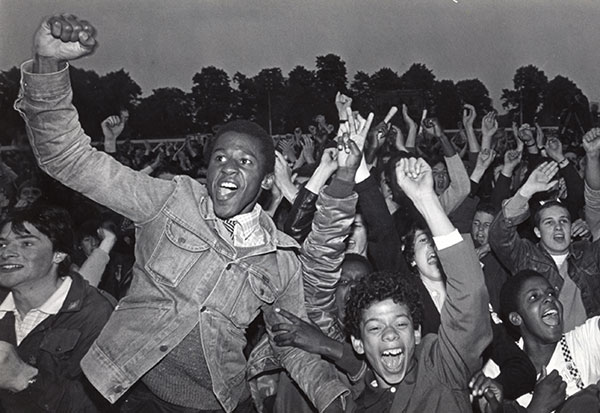
Reggae also started gaining mainstream success when Reggae bands started collaborating with Punk bands for Rock against Racism. This movement that started in 1976 became increasingly popular all-round the UK, eventually spreading all round the world. On the 1978 the Rock against Racism event took place. This massive event that gained world-wide attention and had reggae bands such as Misty in Roots, a band originating in London. This band even led the parade. Presenting how Reggae and punk collaborated to draw attention not only civil rights issues, but black culture and black music.
Hassam Mahamdallie wrote in “How is Racism Changing in Britain” that the punk Do it Yourself aesthetic of small local concerts and magazines plus independent record labels had a positive effect for black music groups such as Reggae. He said it was difficult to measure the success of Rock against Racism with the tools of the Punk DIY aesthetic, but many participants were convinced it had a big effect. He used the quote “Without Rock Against Racism London would not be the multicultural capital of Europe today”. Showing how punk helped draw attention to black music, but also helped the setting up of black music in the UK.
Mullen, John. “UK Popular Music and Society in the 1970s.” Revue Française de Civilisation Britannique. French Journal of British Studies 22, no. XXII-Hors série (2017).

 From Local to Global: The History of Music in London Group 1